

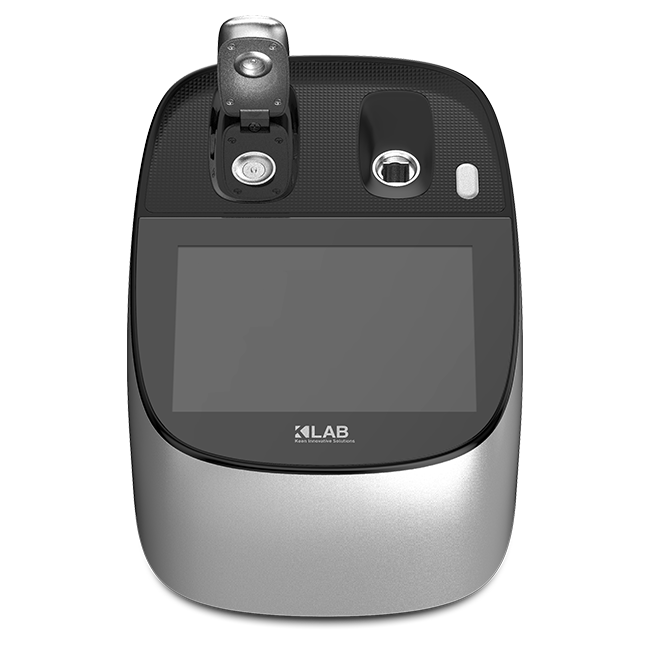


OPTIZEN NanoQ Plus – Advanced Microvolume UV-Vis Spectrophotometer
OPTIZEN NanoQ Plus – Advanced Microvolume UV-Vis Spectrophotometer
Description
Fast Microvolume Analysis of DNA, RNA and Proteins
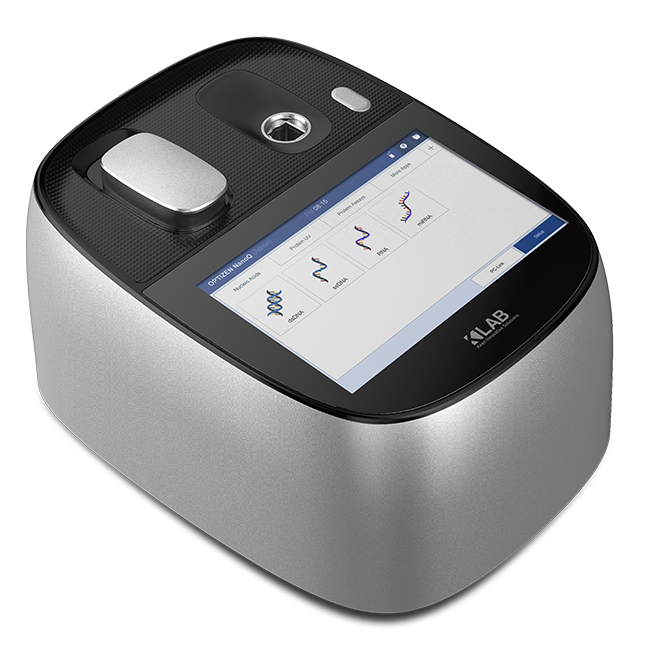
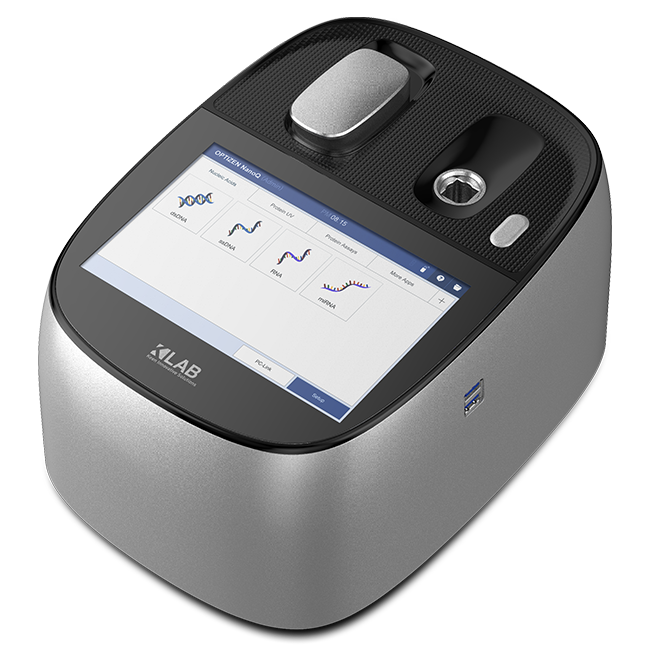
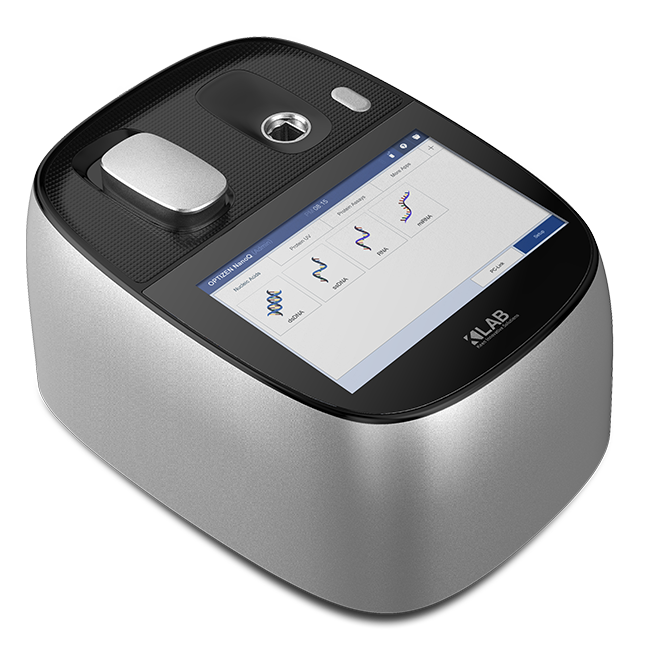
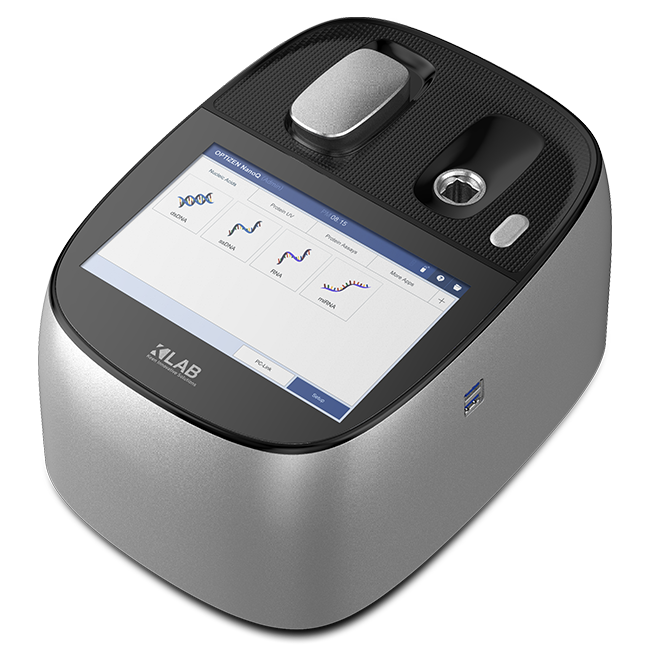
The K-Lab OPTIZEN NanoQ Plus is a compact, full-spectrum microvolume UV-Vis spectrophotometer designed for rapid quantitative analysis of nucleic acids and proteins.
Using as little as 1 µL of sample, NanoQ Plus measures across the 190–850 nm UV-Vis range and provides results in less than 8 seconds.
Unlike pedestal-only microvolume instruments, NanoQ Plus combines microvolume pedestal measurement with conventional cuvette measurement in a single instrument. This gives laboratories the flexibility to work with both very small sample volumes and lower-concentration samples requiring a standard cuvette optical path.
Key Advantages
- Minimum sample volume of just 1 µL
- Full-spectrum 190–850 nm UV-Vis measurement
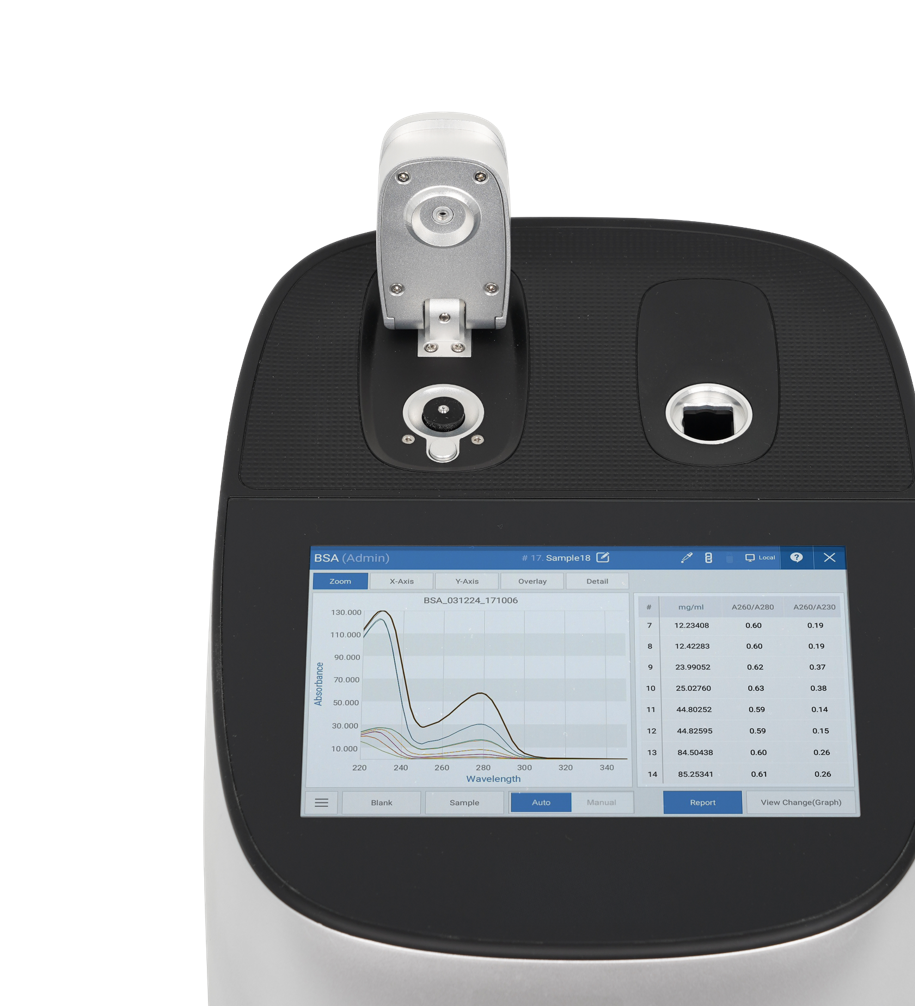
- Microvolume pedestal + cuvette measurement
- Measurement time of less than 8 seconds
- Nucleic acid analysis including dsDNA, ssDNA, RNA and miRNA
- Protein measurement including BSA, IgG, IgE and lysozyme
- Dedicated protein assay capabilities
- OD600 measurement
- Xenon flash lamp with up to 10-year specified lifetime
- 2048-element CMOS linear image sensor
- Large 7-inch touchscreen
- Compact 3.0 kg benchtop design
K-Lab provides more than 20 measurement modes for life-science applications.
Microvolume and Cuvette Measurements in One Instrument
NanoQ Plus provides two measurement approaches in one compact system.
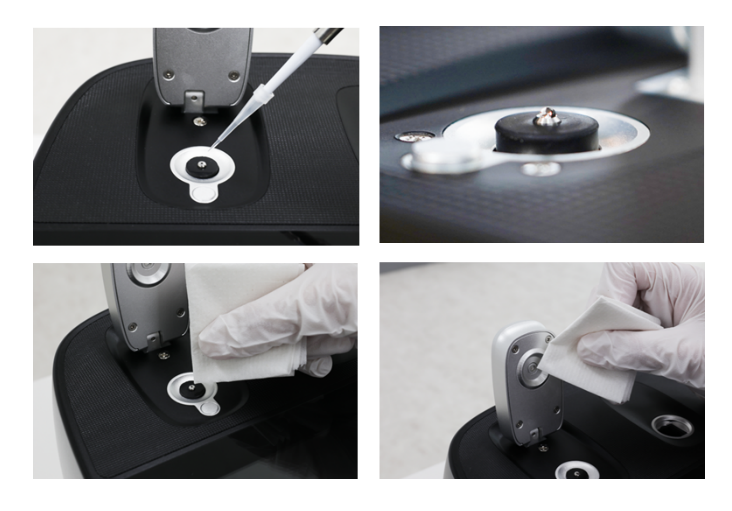
For precious DNA, RNA and protein samples, the microvolume pedestal requires only 1 µL. The sample can be applied directly to the measurement pedestal, eliminating the need for a conventional cuvette.
When lower concentrations or conventional UV-Vis measurements require a longer optical path, the cuvette measurement mode extends the analytical range of the instrument.
This pedestal-and-cuvette combination is a defining feature of the NanoQ Plus model. K-Lab specifically distinguishes NanoQ Plus from NanoQ on this basis.
Full-Spectrum UV-Vis Analysis
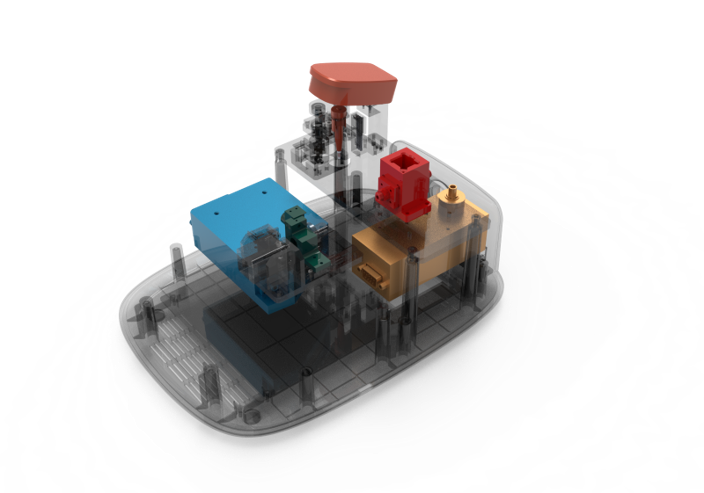
NanoQ Plus uses a xenon flash lamp together with a 2048-element CMOS linear image sensor to acquire UV-Vis spectra from 190 to 850 nm.
The array-based optical system provides full-spectrum measurements in seconds and supports peak/valley detection along with dedicated measurement methods for common life-science applications.
Nucleic Acid Analysis
NanoQ Plus provides dedicated measurement modes for:
- dsDNA
- ssDNA
- RNA
- miRNA
- Custom nucleic-acid factors
For microvolume measurements, K-Lab specifies a dsDNA detection limit below 2 ng/µL and a maximum concentration of 16,500 ng/µL.
Protein Quantification
NanoQ Plus provides dedicated protein measurement modes for commonly analyzed proteins including:
- BSA
- Serum albumin
- IgG
- Human IgE
- Lysozyme
- Custom protein measurements
For BSA microvolume measurements, K-Lab specifies a detection limit below 0.06 mg/mL and a maximum concentration of 400 mg/mL. The cuvette mode extends the specified BSA detection limit to below 0.006 mg/mL.
Protein Measurement Performance Compared with NanoDrop One
K-Lab conducted a direct BSA protein measurement study using the OPTIZEN NanoQ Plus and Thermo Scientific NanoDrop One.
The study evaluated accuracy, precision and linearity across BSA concentrations ranging from approximately 0.8 to 200 mg/mL. Nine concentrations were prepared from a certified protein standard, and 2 µL samples were measured five times at each concentration.
Excellent Precision
Across the approximately 0.8–200 mg/mL protein concentration range, the NanoQ measurements produced %CV values of 1% or less.
K-Lab reported that this demonstrated excellent precision and described the results as comparable with those obtained using NanoDrop One in the same study.
Excellent Linearity
The relationship between expected and measured BSA concentrations produced:
NanoQ Series: R² = 0.9999
NanoDrop One: R² = 0.999

BSA Protein Measurement Linearity
NanoQ Series: R² = 0.9999 | NanoDrop One: R² = 0.999
Expected vs. measured BSA concentration, approximately 0.8–200 mg/mL. Data from K-Lab comparative performance testing.
K-Lab's study therefore demonstrated a strong linear relationship between expected and measured protein concentrations over the tested range.
K-Lab describes the comparative data as demonstrating performance equivalence/similarity between the NanoQ series and NanoDrop One for BSA measurements.
Bradford Protein Assay on the NanoQ Plus
NanoQ Plus can also perform the widely used Bradford Protein Assay, extending its protein-analysis capabilities beyond direct UV protein measurements.
K-Lab evaluated the NanoQ Plus using the Pierce™ Bradford Plus Protein Assay Kit with Dilution-Free™ BSA Protein Standards. Following the Coomassie Brilliant Blue G-250 color-development reaction, samples were measured using the NanoQ Plus dedicated Bradford Assay mode at 595 nm.
Only 2 µL of Reacted Sample Required
BSA standards covering:
125, 250, 500, 750, 1,000, 1,500 and 2,000 µg/mL
were used to construct the calibration curve. Following color development, only 2 µL of reacted sample was applied to the NanoQ Plus pedestal for measurement.
The NanoQ Plus Bradford software provides a default measurement wavelength of 595 nm and supports calibration-curve construction and analysis using standard solutions.
Bradford Assay Performance
The BSA standards produced increasing absorbance with increasing protein concentration. The resulting second-order polynomial calibration curve produced:
R² = 0.9987

Back-calculated concentrations across the seven standards produced relative errors ranging from:
−5.20% to +5.32%
K-Lab concluded from the study that NanoQ Plus can be applied to the Bradford Protein Assay.
Download the complete Bradford Protein Assay application note.
Designed for Everyday Laboratory Use
NanoQ Plus combines its optical system with a modern user interface designed for routine laboratory operation.
The instrument incorporates a 7-inch, 1280 × 800 multipoint capacitive touchscreen that can be operated while wearing laboratory gloves. An octa-core ARM processor, Android operating system and 32 GB of internal storage support onboard operation and data handling.
Connectivity includes:
- 4 × USB-A ports
- Ethernet
- RS232
- Windows 10 and Windows 11 software compatibility
The compact instrument measures only 216 × 290 × 165 mm and weighs approximately 3.0 kg, requiring relatively little laboratory bench space.
OPTIZEN NanoQ Plus Specifications
| Specification | NanoQ Plus |
|---|---|
| Photometric system | Microvolume spectrophotometer |
| Measurement modes | Microvolume pedestal + cuvette |
| Wavelength range | 190–850 nm |
| Light source | Xenon flash lamp |
| Specified lamp lifetime | Up to 10 years |
| Detector | 2048-element CMOS linear image sensor |
| Spectral resolution | 1.5 nm FWHM at Hg 253.7 nm |
| Wavelength display | 1 nm |
| Wavelength accuracy | ±1 nm |
| Minimum sample volume | 1 µL |
| Microvolume photometric range | 0.02–330 A (10 mm equivalent) |
| dsDNA detection limit | <2 ng/µL, microvolume |
| BSA detection limit | <0.06 mg/mL, microvolume |
| IgG detection limit | <0.003 mg/mL, microvolume |
| Maximum dsDNA concentration | 16,500 ng/µL |
| Maximum BSA concentration | 400 mg/mL |
| Cuvette photometric range | 0–2.0 A |
| Cuvette dsDNA detection limit | <0.2 ng/µL |
| Cuvette BSA detection limit | <0.006 mg/mL |
| Cuvette IgG detection limit | <0.0003 mg/mL |
| Cuvette center height | 8.5 mm |
| Absorbance precision | 0.002 AU (0.5 mm path) or 1% |
| Absorbance accuracy | 3% at 0.97 A at 302 nm |
| Measurement time | <8 seconds |
| Display | 7-inch, 1280 × 800 touchscreen |
| Touchscreen | Multipoint capacitive; laboratory-glove compatible |
| Processor | Octa-core ARM Cortex-A53 |
| Storage | 32 GB |
| Operating system | Android |
| Connectivity | 4 × USB-A, Ethernet, RS232 |
| Software compatibility | Windows 10 and 11 |
| Dimensions | 216 × 290 × 165 mm |
| Weight | 3.0 kg |
K-Lab published specifications.
Applications
The OPTIZEN NanoQ Plus is designed for laboratories working in molecular biology, biotechnology, pharmaceutical research, biochemistry and life-science research, with applications including DNA/RNA concentration and purity measurements, protein quantification, Bradford assays, OD600 measurements and general microvolume UV-Vis analysis.
Application Resources
NanoQ Series - BSA Protein Measurement Performance Verification
K-Lab technical note evaluating NanoQ protein-measurement accuracy, precision and linearity, including direct comparative measurements using NanoQ Plus and NanoDrop One.
Download: Analysis Performance of Protein Measurement Using the NanoQ Microvolume Spectrophotometer System
Bradford Protein Assay Using NanoQ Plus
K-Lab application note demonstrating a 2 µL Bradford protein measurement at 595 nm, including sample preparation, calibration curve, NanoQ Plus software and analytical results.
Download: Example of Performing the Bradford Protein Assay Using NanoQ Plus
JM Science - Sales, Applications and Technical Support
JM Science provides the K-Lab OPTIZEN NanoQ Plus along with application assistance and technical support for laboratories throughout the United States, Canada and Mexico.
Contact JM Science to discuss your DNA, RNA, protein or microvolume UV-Vis application, request a quotation, or determine whether NanoQ Plus is appropriate for your laboratory. Sales@jmscience.com; Tel: 716-774-8706