
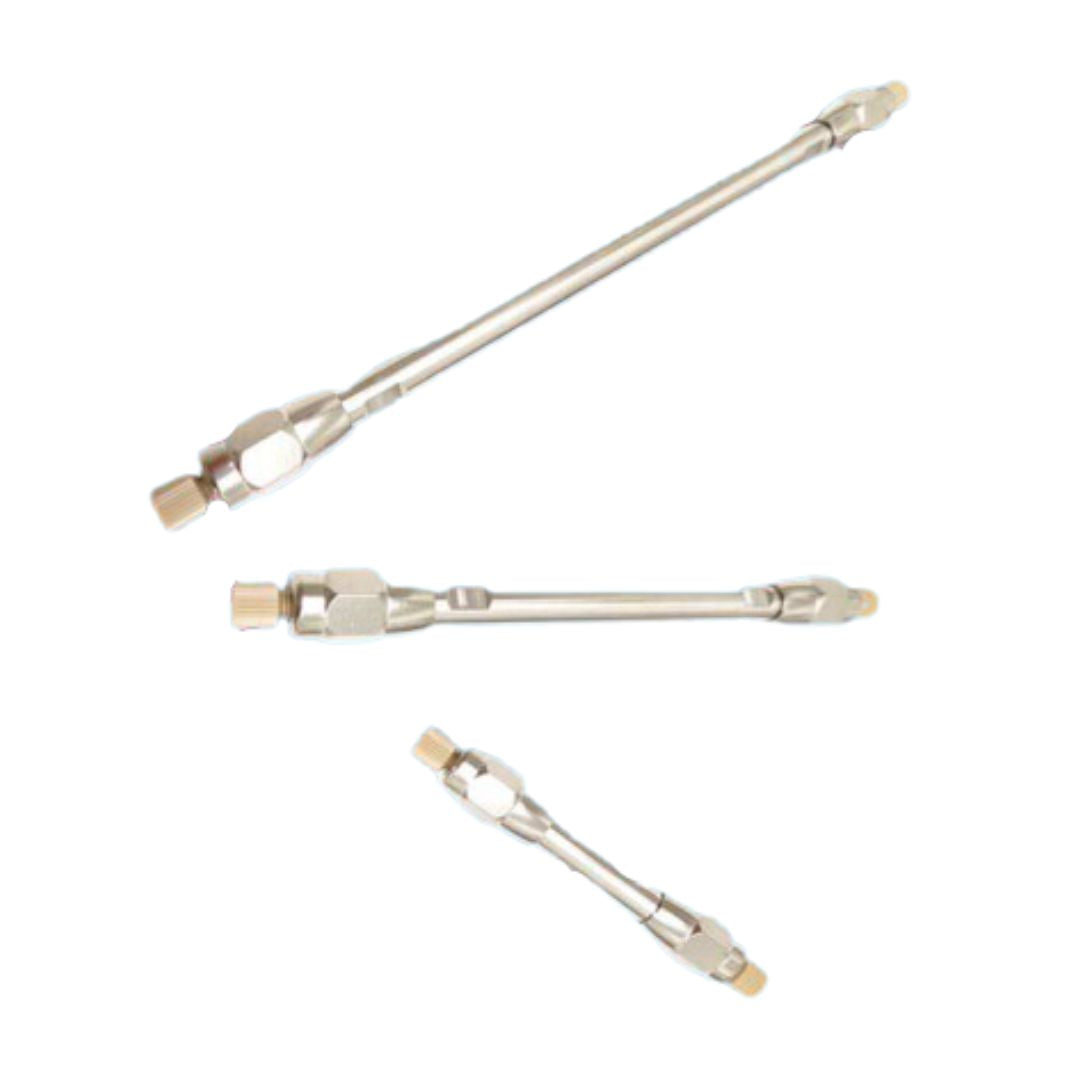

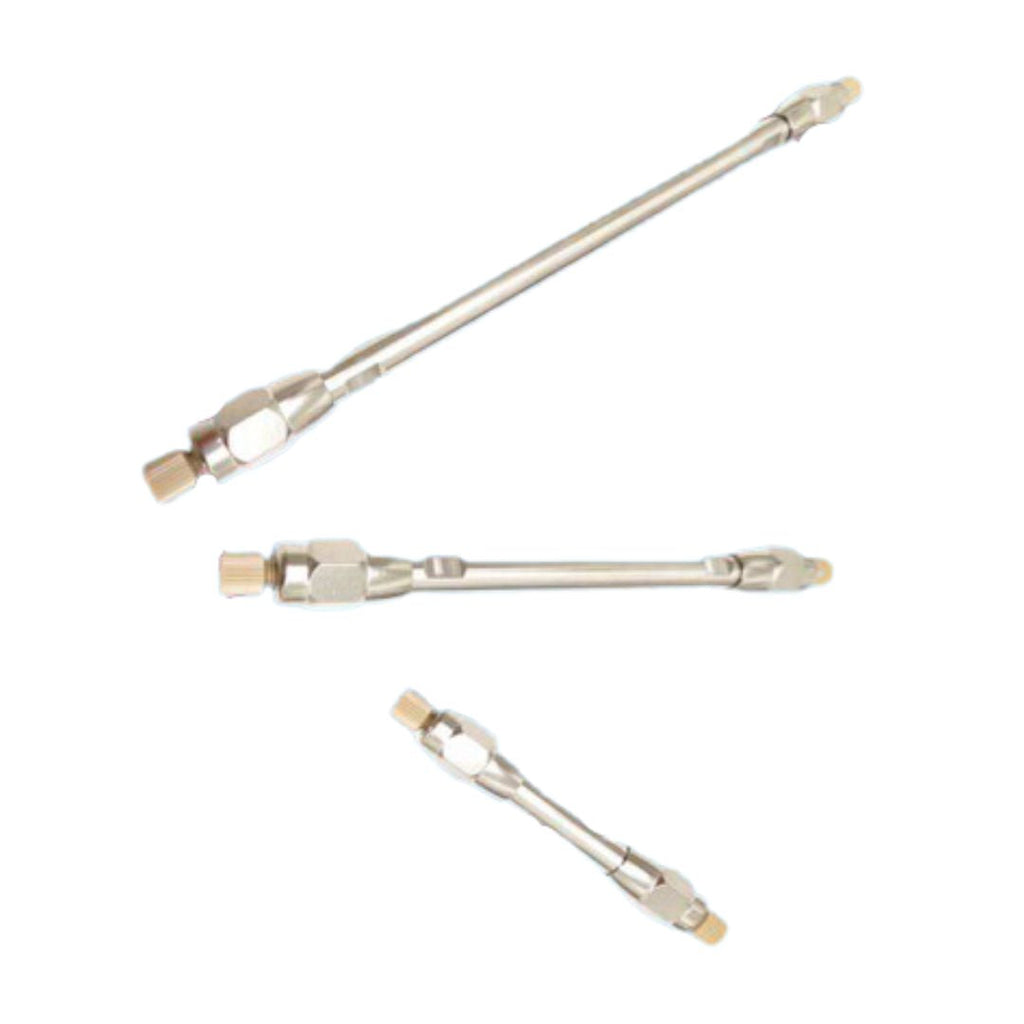

Description
.
CAPCELL PAK INERT ADME-HR HPLC Columns
Preferred for LC-MS and Metal-Sensitive Applications
Fix Peak Tailing and Metal Interaction in HPLC
These issues are often caused by interaction between analytes and metal surfaces within conventional HPLC systems.
CAPCELL PAK INERT ADME-HR columns are specifically designed to eliminate these problems while maintaining strong retention of polar compounds.
CAPCELL PAK INERT ADME-HR columns combine the adamantyl stationary phase with inert internal hardware to minimize metal interaction and secondary adsorption.
For LC-MS workflows and trace-level analysis, even minor interaction with stainless steel surfaces can affect peak shape and recovery. The INERT configuration reduces this risk through PEEK-lined flow paths and inert frit design.
Because the cost difference relative to standard ADME-HR is modest, INERT is frequently selected as the preferred configuration for LC-MS method development and validation.
CAPCELL PAK INERT ADME-HR columns combine the unique adamantyl stationary phase with specially engineered inert hardware to minimize metal interactions and secondary adsorption effects.
Why Conventional Columns Fail
This results in:
• Peak tailing or distortion
• Reduced sensitivity
• Poor reproducibility
• Loss of analyte recovery
Even standard “metal-free” columns may not provide sufficient retention for polar compounds.
While standard stainless steel column hardware is suitable for most applications, certain analytes - particularly nucleotides, phosphate-containing compounds, peptides, and metal-chelating species - can exhibit peak tailing or reduced recovery due to interaction with metal surfaces.
The INERT configuration addresses this challenge through:
• PEEK-lined internal surfaces
• Inert frit design
• Reduced metal exposure throughout the flow path
The result is:
• Improved peak symmetry
• Reduced adsorption
• Enhanced sensitivity
• Improved reproducibility in LC/MS workflows
• Enhanced sensitivity
• Reliable recovery of polar analytes
• Strong retention under reversed-phase conditions
-
Key Characteristics
Stationary Phase: Adamantyl (ADME)
Pore Size: 100 Å
Particle Sizes: 2 µm, 3 µm
pH Range: 2–9
Pressure Resistance: Up to 80 MPa (2 µm)Benefits:
• Reduced metal interaction
• Excellent peak shape for metal-sensitive compounds
• No carry-over effects
• Stable under highly aqueous mobile phasesSpecifications

When to Choose INERT ADME-HR
Select the INERT configuration when:
• Peak tailing is observed on standard stainless steel columns
• Analytes contain phosphate groups
• Chelating agents or metal-binding compounds are present
• LC-MS sensitivity is compromised by adsorption
For most general polar analyte retention applications, standard ADME-HR is appropriate.
• Nucleotides and phosphorylated compounds
• Chelating agents
• Antibiotics
• Trace-level LC-MS analysis
Where even minor adsorption or interaction can significantly impact results.