
Part numbers
Description
ADME HPLC Columns for Polar Compound Analysis | CAPCELL PAK ADME-HR
Retain What C18 Cannot: Advanced HPLC Columns for Polar Compounds
Capcell Pak ADME HPLC columns deliver enhanced retention and selectivity for polar analytes under reversed-phase conditions-without ion pairing or complex mobile phases.
Unlike traditional C18 columns, ADME technology provides a unique balance of hydrophobic interaction and surface polarity, enabling improved separation of metabolites, pharmaceuticals, and biologically relevant compounds.
Why C18 Columns Fail for Polar Compounds
Highly polar analytes often elute near the void volume, resulting in:
• Poor separation
• Co-elution of metabolites
• Reduced sensitivity in LC/MS
• Difficult method development
In many cases, analysts are forced to switch to HILIC or ion-pairing methods, increasing complexity.
CAPCELL PAK ADME-HR columns solve this problem by enabling strong retention under reversed-phase conditions.
🔷 WHAT MAKES ADME DIFFERENT
What is ADME Column Technology?
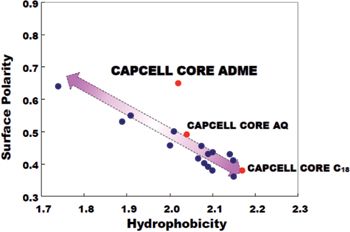
ADME (Adamantylethyl) is a novel stationary phase based on a cage-like adamantane structure bonded to silica via an ethyl spacer.
- Adamantane = rigid, 3D “basket-like” hydrocarbon
- Provides controlled hydrophobicity (C12-like)
- Maintains significant surface polarity
👉 This creates a separation mechanism fundamentally different from C18.
According to your factory data:
- ADME phases show greater retention for polar compounds
- Maintain separation under high aqueous conditions
- Provide different selectivity vs conventional reversed-phase columns
🔷 WHY ADME OUTPERFORMS C18
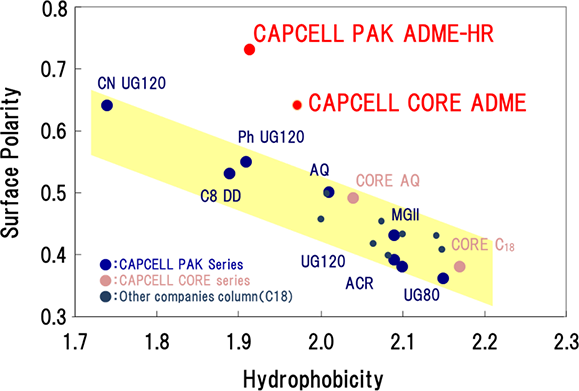
C18 vs ADME: The Critical Difference
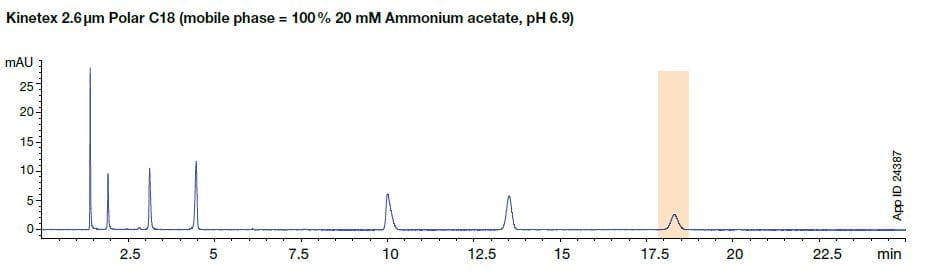
Traditional C18:
- Strong hydrophobic interaction
- Poor retention of polar compounds
- Co-elution of metabolites
- Requires ion-pairing or HILIC workaround
ADME Columns:
- Balanced hydrophobicity + surface polarity
- Stronger retention of polar analytes
- Improved peak shape for metabolites
- Better separation in LC/MS workflows
👉 ADME provides “a truly unprecedented balance of hydrophobicity and surface polarity”
Why C18 Columns Fail for Polar Compounds
• Poor separation
• Co-elution of metabolites
• Reduced sensitivity in LC/MS
• Difficult method development
In many cases, analysts are forced to switch to HILIC or use ion-pairing reagents-adding complexity and variability.
CAPCELL PAK ADME-HR columns solve this problem by enabling strong retention of polar compounds while maintaining reversed-phase conditions.
🔷 KEY PERFORMANCE ADVANTAGES
Why Laboratories Switch to ADME Columns
✅ Superior Polar Compound Retention
- Retains compounds like:
- Acetaminophen
- Nucleotides
- Biogenic amines
- Demonstrated stronger retention vs C18
✅ Improved LC/MS Separation
- Better resolution of:
- Parent drugs + metabolites
- Similar molecular weight compounds
- Reduces co-elution interference
✅ Works in 100% Aqueous Conditions
- No phase collapse
- Ideal for polar workflows
✅ Unique Selectivity
- Different retention order vs C18
- Enables method development flexibility
✅ High Stability and Reproducibility
- Stable over 600+ injections under acidic conditions
Available ADME Column Types
🔹 ADME-HR (Fully Porous)
- General-purpose analytical column
- Particle sizes: 2 µm, 3 µm, 5 µm
- pH range: 2–9
👉 [Request ADME-HR Column Brochure]
🔹 INERT ADME-HR
- Metal-free (PEEK flow path)
- Ideal for:
- Nucleotides
- Chelating compounds
- LC/MS sensitive workflows
👉 [Request INERT ADME Columns]
🔹 CORE ADME (Core-Shell)
- High efficiency / fast analysis
- Ideal for LC-MS/MS
👉 [Request ADME Core-Shell Brochure]
🔷 APPLICATIONS
Applications of ADME HPLC Columns


Pharmaceutical Analysis
- Drug + metabolite separation
- Pharmacokinetics (PK studies)
- Impurity profiling
Bioanalytical / LC-MS
- CYP metabolite studies
- Polar biomolecules
- Reduced ion suppression
Food & Beverage
- Additives and contaminants
- Biogenic amines
- Organic acids
Environmental
- Polar contaminants
- Trace-level detection
🔷 METHOD DEVELOPMENT ADVANTAGE
Simplify Your HPLC Method Development
ADME columns allow you to:
- Avoid ion-pairing reagents
- Use simpler mobile phases
- Start with higher organic content
- Maintain retention of polar analytes
👉 This significantly reduces:
- Method complexity
- Analysis time
- Instrument contamination
When Should You Choose ADME Instead of C18?
| Application Type | Recommended Column |
|---|---|
| Non-polar compounds | C18 |
| Mixed polarity samples | C18 or ADME |
| Highly polar compounds | ✅ ADME (Best Choice) |
| Metabolite profiling | ✅ ADME |
| LC-MS sensitivity critical | ✅ ADME / INERT ADME |
Proven Applications of ADME Columns
• Nucleosides and nucleotides
• Water-soluble vitamins
• Pharmaceutical metabolites
• Biogenic amines
• Polar drug compounds
Explore real-world application methods:
→ Nucleoside analysis
→ Vitamin analysis
→ Metabolite separation
ADME S2: UHPLC Performance for Polar Compounds
For laboratories using UHPLC systems, CAPCELL PAK ADME S2 columns extend the benefits of ADME technology to high-speed, high-resolution separations.
These sub-2 µm columns are specifically designed for gradient UHPLC analysis of polar compounds that are poorly retained on conventional C18 columns.
Compared to traditional UHPLC C18 columns, ADME S2 provides:
• Increased retention of hydrophilic analytes
• Different selectivity for improved separation
• Compatibility with fast gradient UHPLC methods
• High pressure tolerance up to 100 MPa
For laboratories requiring higher speed and efficiency, ADME technology is also available in sub-2 µm UHPLC formats.
This enables faster, more reliable separation of polar compounds without changing chromatographic mode.
Explore ADME Column Solutions
• ADME-HR (general use)
• INERT ADME-HR (metal-sensitive applications)
• CORE ADME (high-efficiency LC-MS workflows)
Learn more:
→ ADME Technology Overview
→ INERT ADME Columns
→ CORE ADME Columns
Technical Resources
👉 Request full technical brochure
👉 Request ADME application data and chromatograms
Not sure if ADME is right for your application?
Our team can help you:
• Compare ADME vs C18 performance
• Recommend the correct column format
• Optimize your method for polar compounds
→ Request application support
→ Request a quotation